There’s a specific trap new sewists fall into when picking their first Etsy product: choosing a pattern that looks impressive rather than one they can actually finish consistently, well, and fast enough to be worth their time. A beautifully complex dress pattern that takes you six hours and three unpicked seams isn’t a good first product — a well-made zipper pouch that takes forty minutes probably is. Below are 15 beginner-friendly sewing patterns you can actually sell on Etsy, sorted roughly from simplest to most involved.
What to Check Before You Buy a Pattern to Resell
A few things matter more when you’re buying a pattern to sew for sale than when you’re sewing something for yourself:
- “Sew and sell” license vs. personal use only. Most PDF sewing patterns distinguish between the right to sew from the pattern for personal use and the right to sell finished items made from it — these are often licensed separately, so confirm the specific pattern allows commercial/finished-item sale before building a product line around it.
- Nested sizing. A pattern with nested sizes lets you print or trace just your needed size range instead of one fixed size — worth checking if you plan to offer size options to buyers.
- Printing format. PDF patterns usually print either as tiled letter/A4 pages you tape together at home, or as a single wide-format sheet meant for a copy shop — factor the copy-shop cost in if you’re not set up to print A0-size at home.
- Listed skill level and finishing time. A pattern honestly labeled “beginner” with a realistic time estimate helps you gauge whether it’s actually a good first product, not just a good first project.
Accessories & Bags
The lowest-barrier starting category — small, low-fabric-requirement projects that forgive minor mistakes better than a wearable garment does.
1. Zipper Pouch Pattern — a simple lined pouch, one of the most commonly recommended true-beginner projects since it teaches zipper installation on a small, forgiving scale.
2. Reversible Tote Bag Pattern — a straightforward tote with a lining, good practice for basic seams and topstitching without any closures to fuss with.
3. Drawstring Bag Pattern — an even simpler no-zipper option, often the very first pattern recommended to brand-new sewists.
4. Fabric Coaster Set Pattern — a small, quick-sew project useful for practicing straight seams and quilting-style topstitching in a low-stakes format.
👉 See the full beginner bag & accessory pattern set
Home Decor
Slightly larger projects than accessories, but still mostly straight seams — a natural next step once basic construction feels comfortable.
5. Envelope Pillow Cover Pattern — a no-zipper pillow cover using an overlapping back panel, one of the simplest ways to practice measuring and cutting for a specific finished size.
6. Simple Table Runner Pattern — straight-line sewing with optional quilting, a good project for practicing consistent seam allowances over a longer piece of fabric.
7. Fabric Basket / Bin Pattern — introduces basic structure and interfacing without the complexity of a garment, useful for building confidence with slightly stiffer materials.
8. Cloth Napkin Set Pattern — a repetitive, simple hem project — good for practicing consistency across multiple identical pieces, which matters once you’re making several to sell as a set.
Simple Garments
The step up to wearables — still beginner-appropriate, but requiring a bit more comfort with fit and finishing than the categories above.
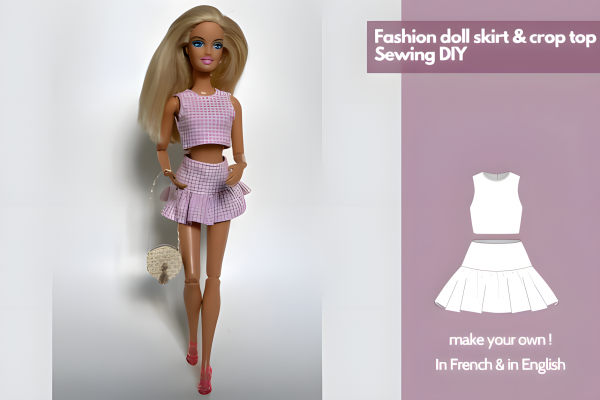
9. Elastic-Waist Skirt Pattern — no zipper or precise waistband fitting required, a common first-garment recommendation for exactly that reason.
10. Simple A-Line Dress Pattern — a loose, forgiving silhouette that doesn’t require close fitting, making sizing mistakes less noticeable in the finished product.
11. Basic Tee Pattern (Knit Fabric) — introduces sewing with stretch fabric and a serger or stretch stitch, a useful skill to build even though knit fabric has its own learning curve.
12. Elastic-Waist Shorts Pattern — similar construction logic to the skirt above, a reasonable next step once that pattern feels comfortable.
Kids’ & Baby Sewing
A strong beginner-to-sell category specifically because buyers are often more forgiving of minor imperfections on a small, low-cost item than on adult clothing.
13. Baby Bib Pattern — small, low-fabric-requirement, and quick to sew in batches, making it an efficient first product to test selling at all.
14. Elastic-Waist Kids’ Shorts Pattern — the same beginner-friendly construction as the adult version, scaled down, and a steady seller for parents restocking fast-growing kids’ wardrobes.
15. Simple Baby Blanket Pattern — straightforward straight-seam sewing on a larger piece of fabric, often paired well with an embroidered monogram or applique as an add-on.
👉 Browse the full kids’ & baby beginner pattern collection
How to Pick Your First Product to Actually Sell
With 15 options, the question isn’t which pattern is “best” — it’s which one you can make consistently well, fast enough to be worth pricing reasonably, and out of fabric you can source affordably. A few filters:
- Start with whatever you can finish in under an hour. Faster turnaround means more room to price competitively while still making it worth your time.
- Make three before you list one. The third attempt at any new pattern is usually noticeably cleaner than the first — sell your best, not your practice piece.
- Pick a pattern with low fabric waste. Small accessory patterns typically use fabric more efficiently than garments, which matters for your actual profit margin as a beginner.
Buying Individually vs. a Beginner Pattern Bundle
If you already know which single project you want to start with, buying that pattern individually is the simplest option. If you’re not sure yet which category will actually suit you, a bundled beginner pattern set lets you try two or three project types before committing further.
👉 Explore the full beginner sewing pattern library on Creative Fabrica
FAQ
Can I legally sell items I sew from a pattern I bought? Only if the specific pattern’s license explicitly includes a “sew and sell” or commercial-use clause — many patterns license personal use only, so check the individual listing before building a product line around it.
Do I need a serger to sew beginner-friendly patterns? No — most of the patterns above can be sewn on a standard sewing machine with a straight and zigzag stitch; a serger becomes more useful once you’re regularly sewing with knit or stretch fabrics.
What does “nested sizing” mean on a PDF pattern? It means multiple sizes are included on the same pattern pieces, layered with different line styles, so you print or trace only the size (or size range) you need instead of buying a separate file per size.
Should I print my pattern at home or use a copy shop? Home printing (tiled letter or A4 pages taped together) works fine for smaller patterns but gets tedious for larger garment pieces — a copy shop print of the wide-format version is often worth the small cost for bigger projects.
How do I price a handmade item made from a beginner pattern? At minimum, account for fabric cost, notions (zippers, elastic, interfacing), and your actual sewing time at an hourly rate you’d accept — beginners often underprice by forgetting to value their own time.
Bottom Line
The most sellable first sewing product usually isn’t the most impressive one — it’s the one you can make consistently well, reasonably fast, and out of fabric that doesn’t eat your entire margin. Start with a small accessory or home decor pattern, sew a few practice rounds before your first listing, and confirm the pattern’s license actually allows selling finished items before you build a shop around it.
Related read: our guide to 20 best machine embroidery designs for baby blankets & onesies pairs well with the kids’ and baby sewing patterns above, if you want to add a monogram or applique to a finished piece.
👉 Browse the full beginner sewing pattern library on Creative Fabrica →